

10 个自然去双下巴的 AI 修图提示词(附实测前后对比)

本文目录
很多时候,一张满意的照片只差在下巴线条上做一点微调。你真正想留住的是当时的笑容、原本的脸型,以及画面里身边的人,而不是换一张像开了重度美颜的“假脸”。
真正好用的去双下巴提示词(Prompt),关键不只在于写出“要删掉什么”,更在于明确划定“哪些细节绝对不能动”。下面整理了 10 个针对不同拍摄场景的实测提示词,每组都附有生成原图与 AI 局部微调后的真实对比。
在 Reddit 一则热门的婚礼照片求修图帖中,高赞评论普遍认可那个“保留了新娘原本神态与脸型”的版本,而把脖子强行拉长、下颌削尖的修法则遭到一致吐槽。检验 AI 修图成不成功也是同理:先看整个人还是不是原来的样子,再看下巴收得自不自然。
如何把这些提示词用在自己的照片上
-
上传高清原图。 尽量选一张能看清下巴、上颈部以及附近衣领或配饰的原图。经过多次截图或压缩的照片会丢失大量皮肤细节,容易让 AI 修出塑料感。
-
将原图设为参考输入。 在 图生图生成器 中点击 Add reference image,并选择支持垫图编辑的模型。如果不挂载原图,编辑指令就无法锁定照片里的人物特征,只会凭空捏造一张新面孔。
-
套用最接近的场景模板。 挑一个与你照片光线、角度最接近的场景,把提示词里的衣服款式、人物位置替换成照片中的实际情况,并保持原始画幅比例(本文示例统一采用 4:3)。
-
单次生成,逐项比对。 出图后先别只盯着下巴——先检查眉眼、嘴巴、脸宽、颈部长度和周围背景有没有走样。一旦五官特征变了,直接退回原图重新编辑,不要在跑偏的结果上继续叠加修改。
在自己改写指令时,可以直接套用这个实用框架:目标人物 + 下巴下方的具体修改动作 + 修改强度 + 必须保留的细节。例如,与其笼统地写“把大家修得更好看”,不如明确写成:“轻微淡化中间穿绿衣服的人下巴下方的褶皱,严格保留原本的脸宽、笑容、颈长、真实皮肤纹理以及旁边的同伴。”
如果不想从零手写英文指令,可以用 AI 提示词生成器 把你的画面描述自动整理成结构化的修图指令(本文的 10 组成对提示词均由该工具生成)。如果你手头已经有现成照片,直接复制下方的“编辑提示词”即可;折叠区内的“原图生成提示词”仅用于复现本文的虚构测试样本。
按照片场景选择提示词
以下每张“编辑前”原图均为 AI 生成的虚构成年人,编辑图则以对应原图作为参考输入生成。它们仅用于演示人像照片的局部修图效果,不代表现实中的体型变化或任何医疗美容效果。
文中的 10 个场景代表最值得尝试的常见修图情境,中文解析保留了实测使用的英文原版提示词,便于直接核对与复现;在每组图注中,我们也如实记录了模型未能完全遵循指令的细节。
实测环境设置: 统一使用 Promptsref 中标注为 GPT Image 2.5 Sunburst 的模型,1K 分辨率、4:3 画幅,每次编辑仅引用对应的单张原图。本文保留了输出图片上的网站默认水印;在选定 1K 档位后,不同批次生成文件的实际像素尺寸仍存在轻微差异。
1. 日常人像:先做小范围微调
表情放松、构图简单的单人日常照,最适合拿这一条起手。使用时只需把提示词中的 woman 和 beige background 替换成照片里实际的人物与背景,同时保留关于脸宽和下巴自然阴影的限制条件。
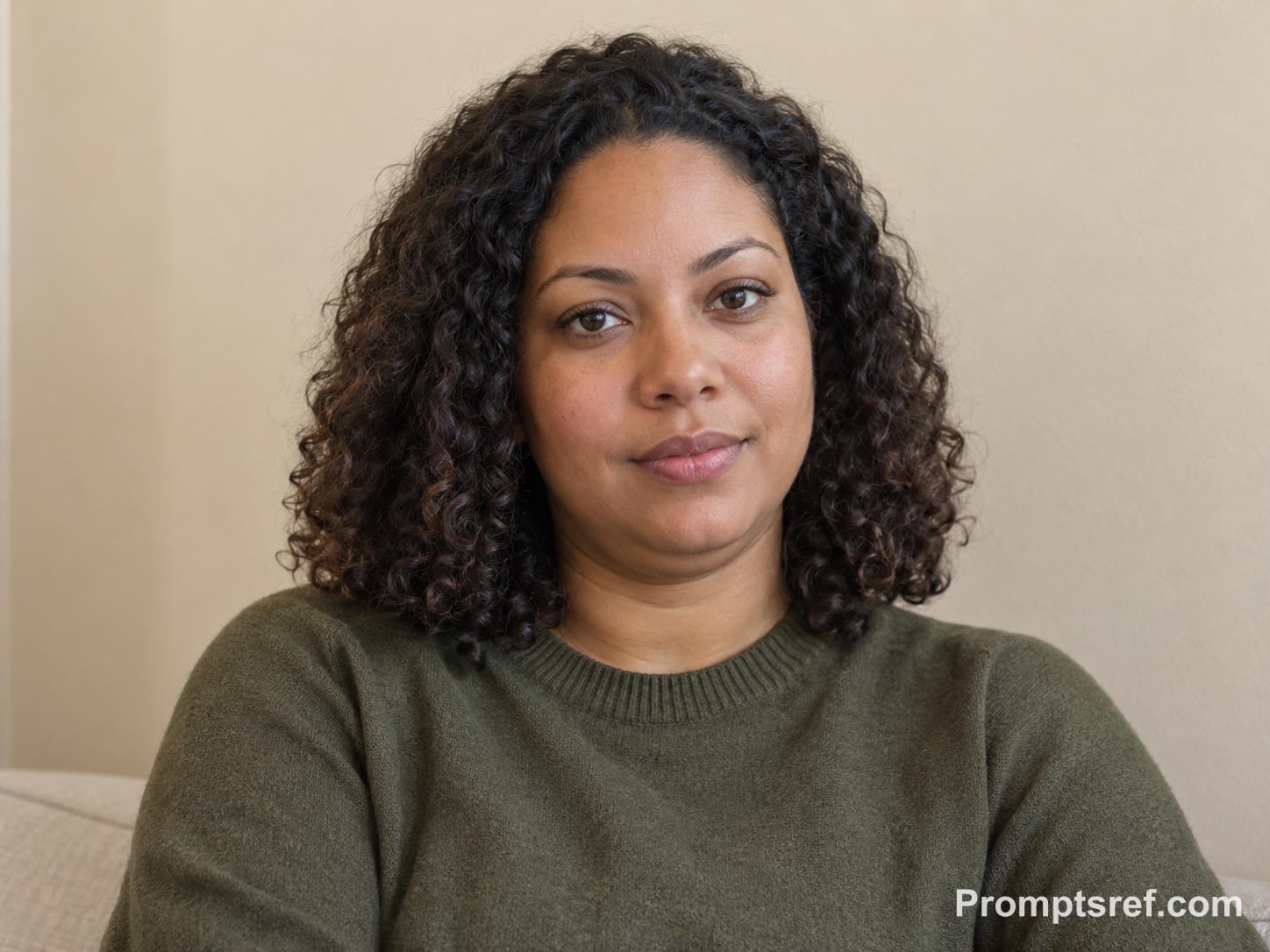
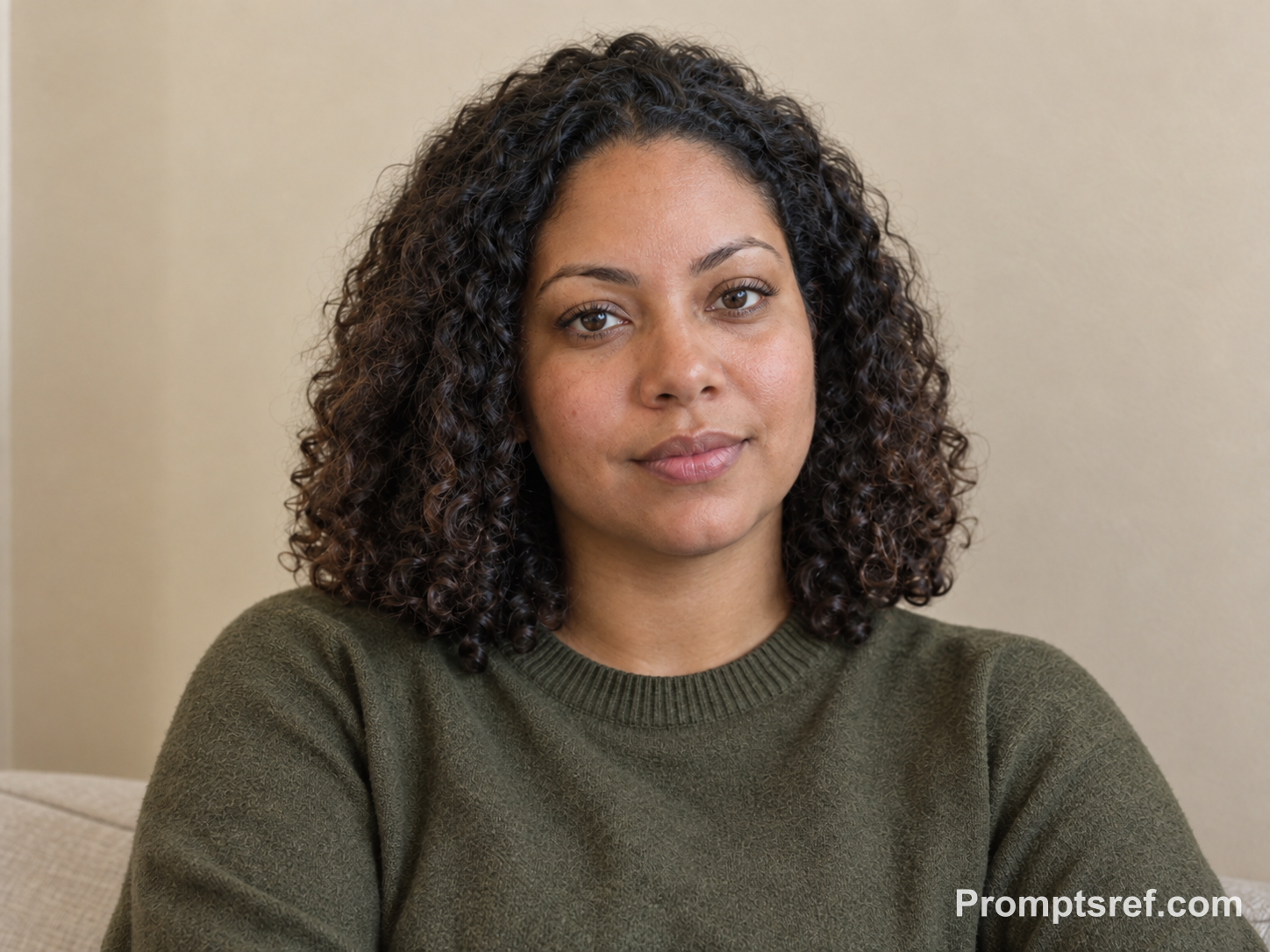
实测效果复盘: 下巴下方的第二道挤压褶皱明显淡化,卷发、抿嘴的神态以及毛衣款式依然清晰可辨。不过颈部肌肤变得更平滑,皮肤与毛衣织物的微小纹理也有所重绘——这说明不能把 AI 的局部修改等同于“下巴以外的像素完全锁死”,出图后仍需留意整体质感。
可直接复制的编辑提示词(实测英文原文):
Using this exact before image, remove only the secondary under-chin fold beneath the chin. Preserve the woman’s identity, facial features, face width, chin projection, neck length, age, body size, hairstyle, clothing, pose, expression, lighting, camera perspective, and beige background. Keep ordinary pores and skin texture, with an anatomically plausible neck contour and some natural shadow remaining under the chin. Do not slim the overall face or alter any other feature.
展开查看虚构原图的生成提示词
Create a realistic fictional adult woman in her early thirties, seated against a softly lit beige wall for a neutral everyday portrait. She has medium-brown skin, shoulder-length natural curls, an olive crew-neck sweater, relaxed posture, and a calm closed-mouth expression. Show a clearly visible but ordinary secondary double-chin fold beneath her chin, with natural skin texture, realistic neck anatomy, soft window lighting, and a simple uncluttered background. Horizontal 4:3 composition.
2. 低角度自拍:保留原来的仰拍透视
手机从下往上拍的自拍,最容易因视角挤压显出双下巴。修这类照片时必须保留原有的仰拍透视——如果同时让模型把视角改成平视,你就很难判断它究竟是收紧了下巴,还是直接重画了一整颗头。
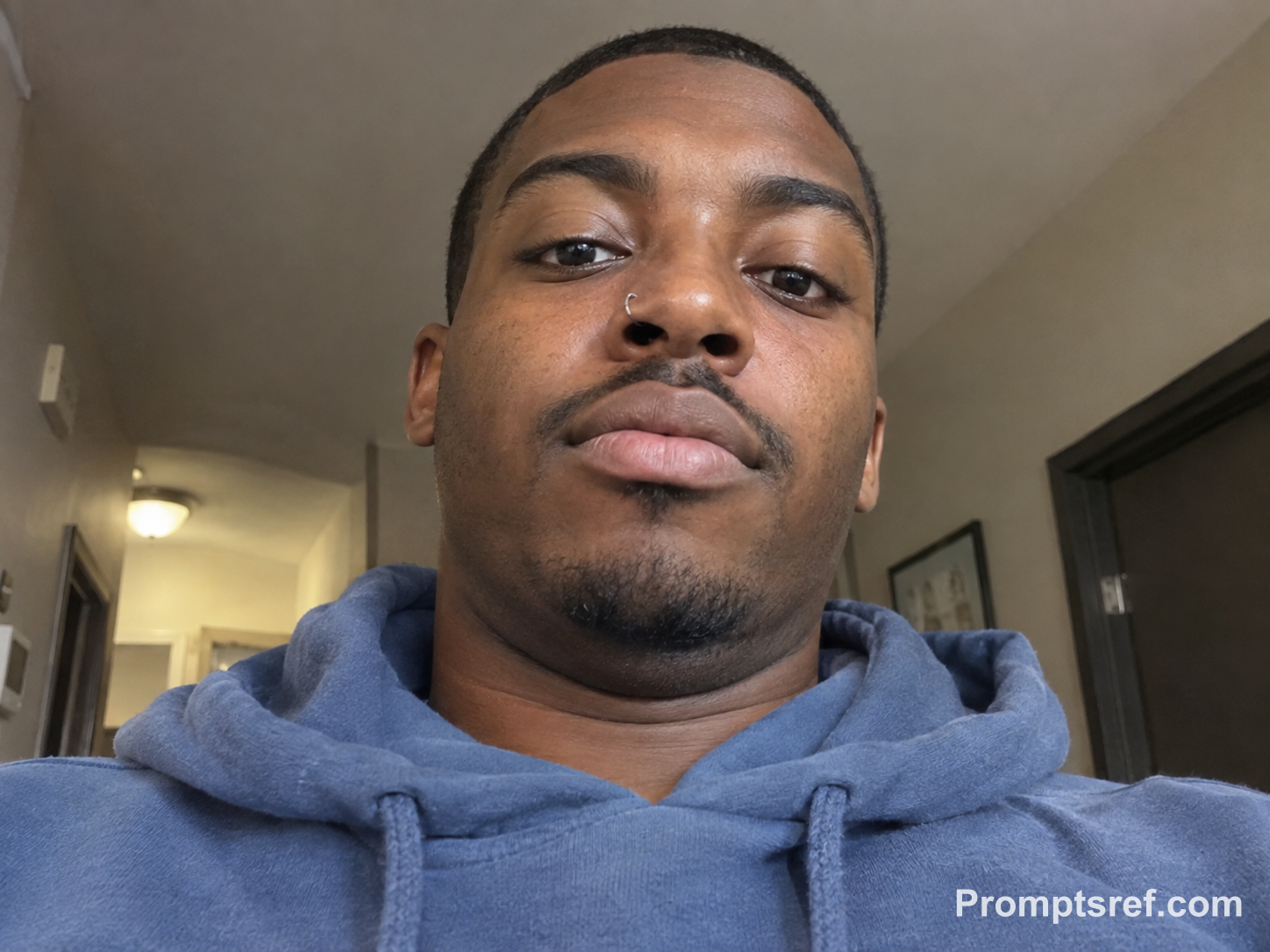
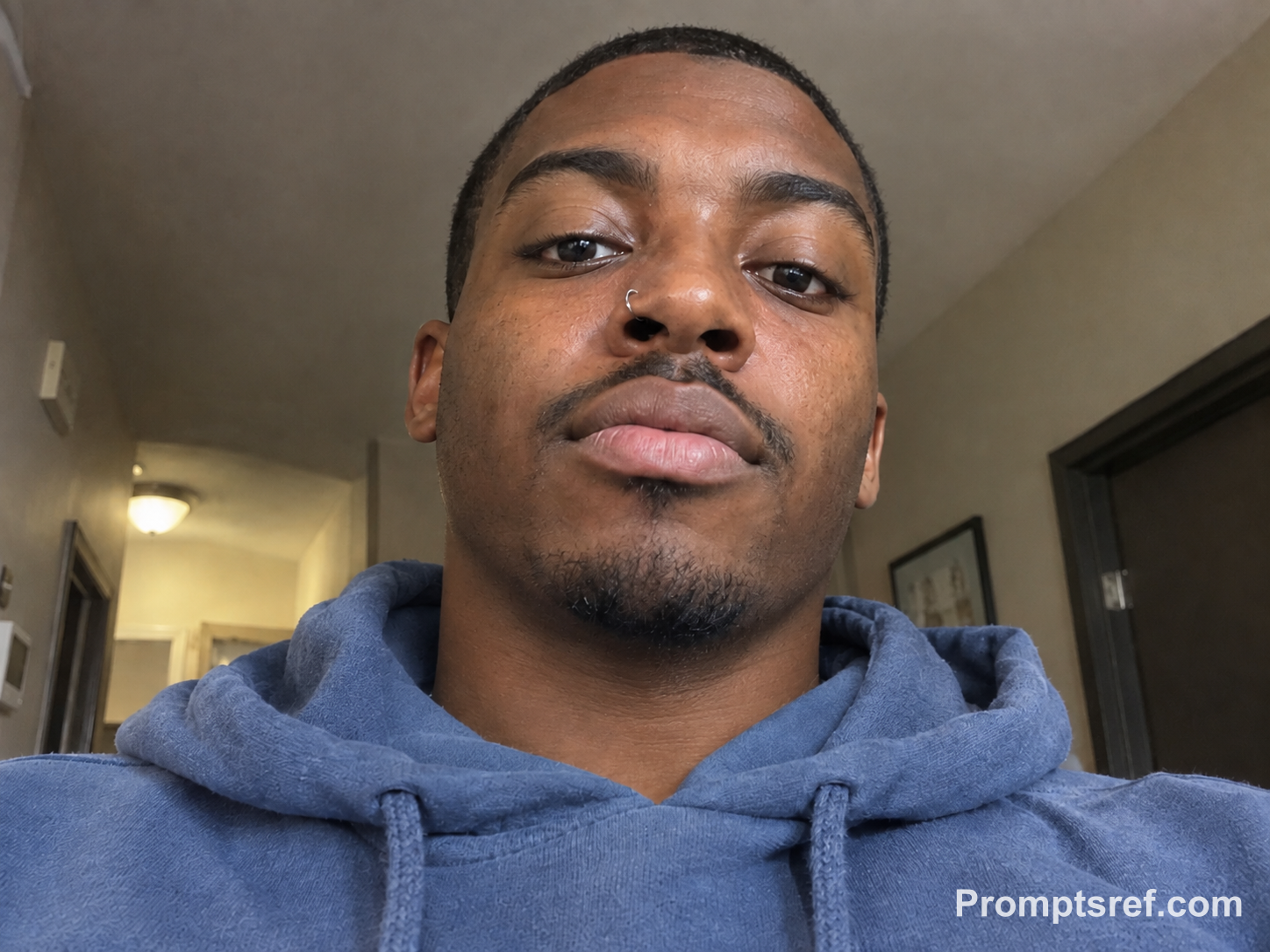
实测效果复盘: 卫衣领口上方的横向肉褶明显减轻,同时原本略带仰角的手机自拍透视感得以保留。需要注意的是,颈部皮肤纹理在修图后变得更平滑;如果你希望保留更多原生抓拍纹路,建议重点比对这一区域。
可直接复制的编辑提示词(实测英文原文):
Using this exact before image, remove only the secondary under-chin fold visible from the low-angle selfie perspective. Preserve the man’s identity, facial proportions, face width, chin projection, neck length, age, body size, hairstyle, nose ring, hoodie, pose, expression, phone perspective, lighting, and apartment hallway. Retain realistic pores and a plausible natural shadow beneath the chin. Do not change the jawline broadly, slim the face, or modify the background.
展开查看虚构原图的生成提示词
Create a realistic fictional adult man in his late twenties taking a low-angle phone selfie from slightly below face level. He has dark skin, closely cropped hair, a small nose ring, and a faded blue hoodie. His eyes look into the phone with a neutral, mildly curious expression. The low perspective clearly shows an ordinary secondary double-chin fold, natural skin texture, realistic indoor hallway lighting, slight phone-camera perspective, and a softly blurred apartment background. Horizontal 4:3 composition.
3. 婚礼笑脸:别把自然笑容一起修僵
处理开怀大笑的抓拍时,验收顺序是先比对笑容、再看下巴。仔细检查嘴角弧度、笑起来时的面颊笑纹以及耳饰位置,确认这些细节没有走样后,再决定是否采纳该版本。
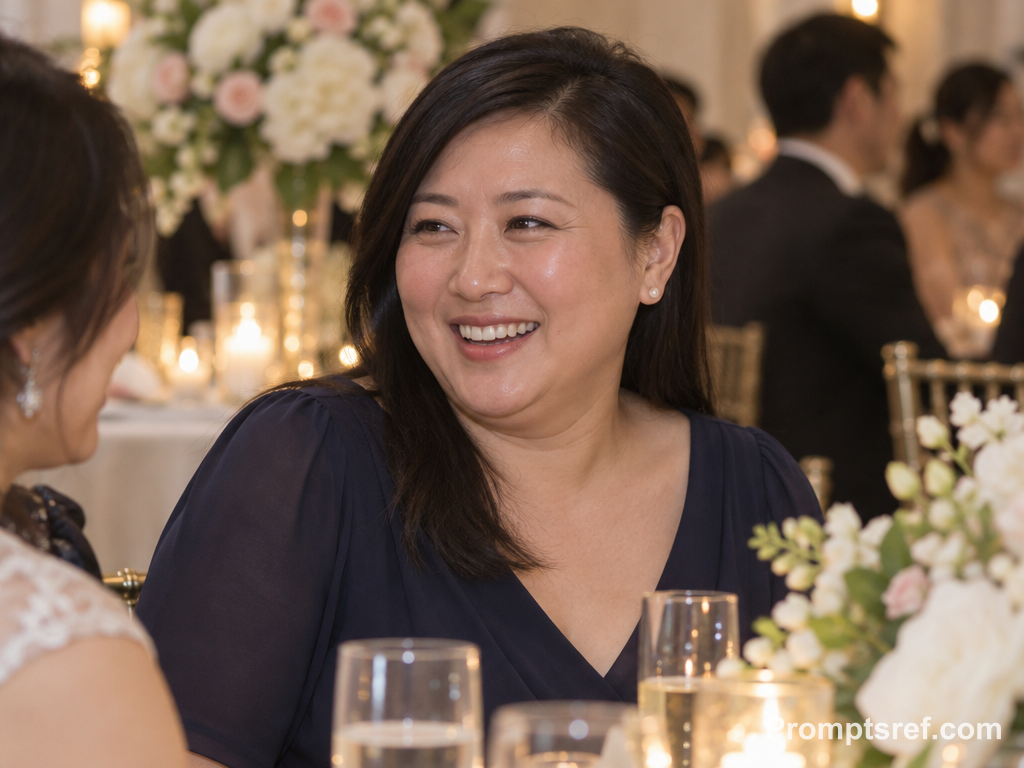
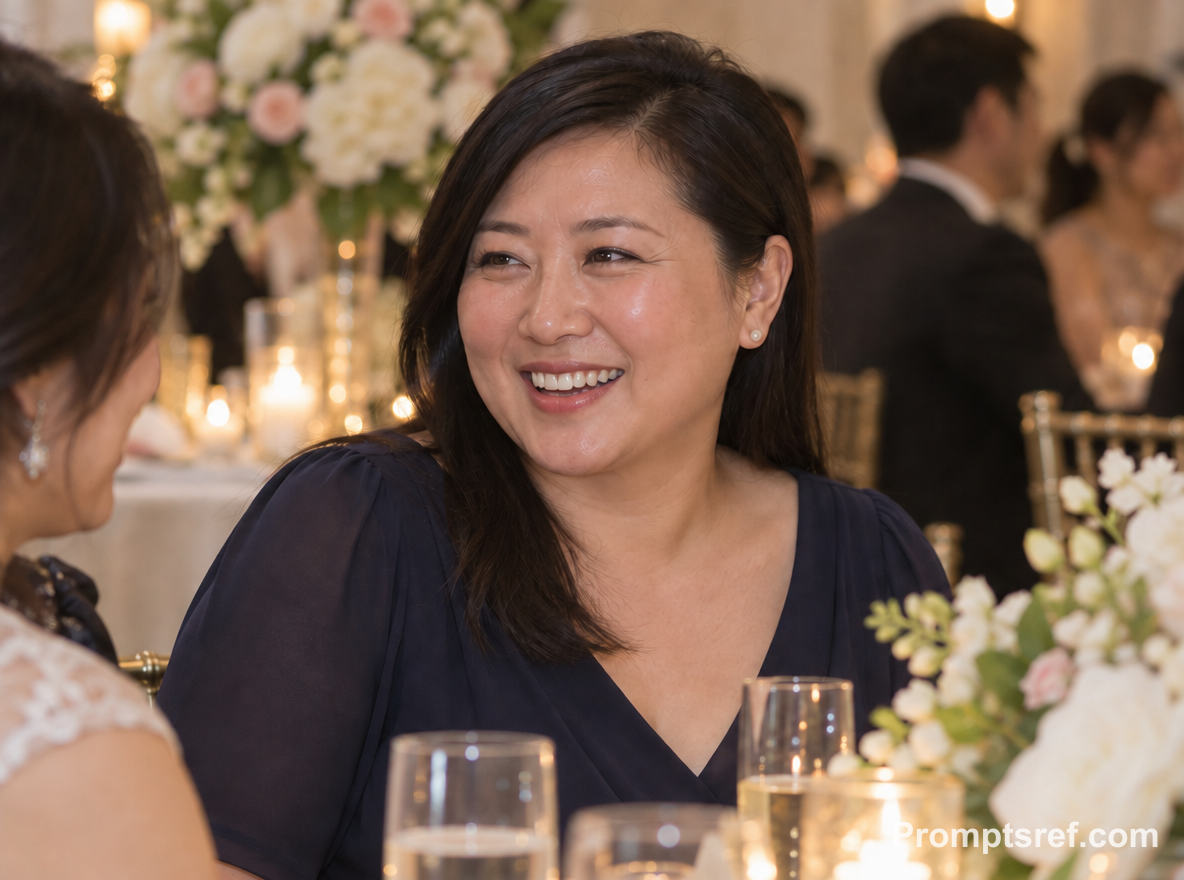
实测效果复盘: 人物的笑容感染力、珍珠耳饰和婚宴现场光影在视觉上保持了高度一致,下巴下方的挤压褶皱明显消退。不过上颈部整体也变得更光滑,说明模型并非只是单纯擦掉了一道细纹,而是对下颌至颈部的过渡区做了整体柔化。
可直接复制的编辑提示词(实测英文原文):
Using this exact before image, remove only the secondary under-chin fold beneath the smiling guest’s chin. Preserve her identity, smile, facial expression, face width, chin projection, neck length, age, body size, pearl earrings, hairstyle, navy dress, pose, warm reception lighting, floral background, and camera framing. Keep natural smile lines, pores, and a believable small shadow under the chin. Do not change makeup, facial shape, body proportions, or clothing.
展开查看虚构原图的生成提示词
Create a realistic fictional adult East Asian woman in her forties attending a wedding reception, smiling naturally toward a nearby friend. She wears a navy dress, small pearl earrings, and her straight black hair is tucked behind one ear. Frame her from the chest up beside softly glowing floral decorations. Show a clearly visible but ordinary secondary double-chin fold while preserving natural smile lines, skin texture, warm indoor lighting, and realistic candid detail. Horizontal 4:3 composition.
4. 商务头像:拿衬衫衣领检验颈部是否变形
修职场形象照时,衣领是极佳的几何参照物。如果修图后下巴尖到衣领的距离明显拉大,说明模型在淡化褶皱的同时暗中拉长了脖子。


实测效果复盘: 衬衫领口上方的堆积感有效减轻,眼镜与衣领轮廓依然清晰准确。不过原图下方有几道自然颈纹也随之变淡了;如果这些体现成熟阅历的纹路是你想保留的细节,建议在提示词中进一步调低修改强度。
可直接复制的编辑提示词(实测英文原文):
Using this exact before image, remove only the secondary under-chin fold while keeping the man’s identity completely consistent. Preserve his glasses, salt-and-pepper hair, facial features, face width, chin projection, neck length, age, body size, shirt collar, blazer, posture, expression, professional lighting, office background, and framing. Maintain natural pores, skin texture, and an anatomically plausible modest shadow beneath the chin. Do not sharpen, retouch, beautify, or globally slim his face.
展开查看虚构原图的生成提示词
Create a realistic fictional adult Black man in his fifties for a corporate headshot, wearing a light-blue button-up shirt with the collar visible beneath a charcoal blazer. He has short salt-and-pepper hair, rectangular glasses, and a composed expression. Photograph him against a softly lit cool-gray office background. Show a clearly visible but ordinary secondary double-chin fold, authentic skin texture, subtle under-chin shadow, professional lighting, and a straight-on chest-up pose. Horizontal 4:3 composition.
5. 侧面与四分之三侧面:守住鼻唇与下巴尖的位置关系
处理侧脸或四分之三侧脸时,需要以鼻尖、嘴唇、下巴尖和外耳轮廓作为定位参照。“把下巴往前推(改变骨相)”和“收紧下巴底部的松弛褶皱”完全是两码事,指令上必须严格区分。
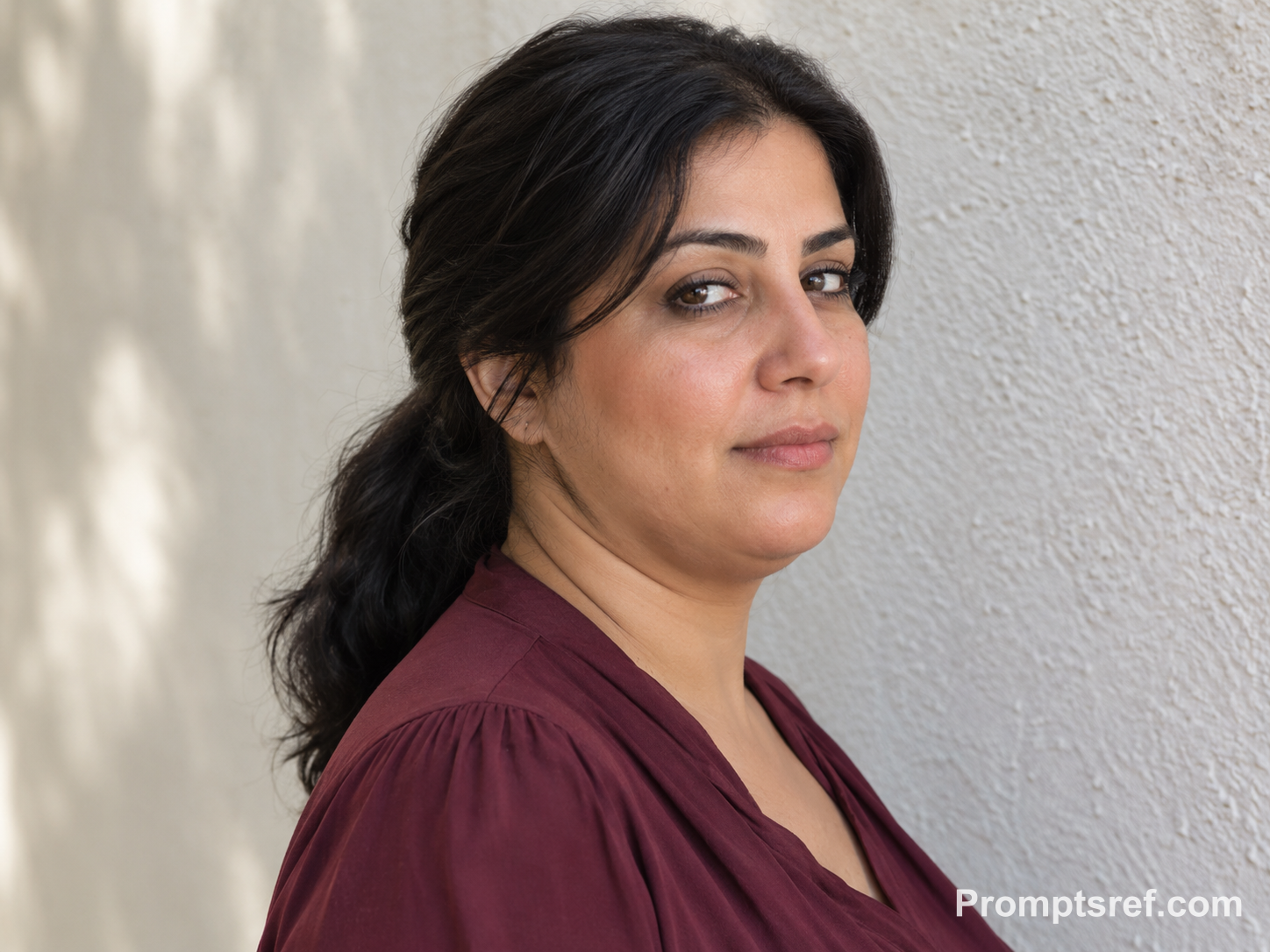
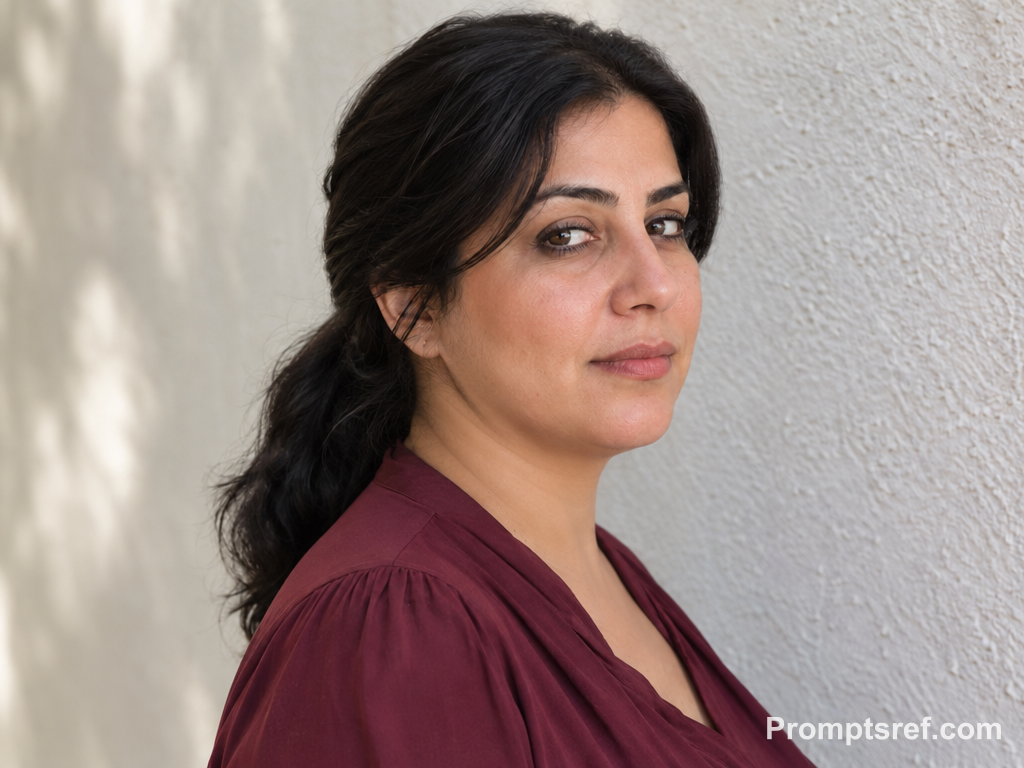
实测效果复盘: 侧脸下巴下方的小幅折痕被干净收拢,鼻尖、嘴唇、低马尾与背景墙面的相对位置保持不变。修图后下颌到颈部的分界线变得更加利落;如果你追求更柔和、不那么锋利的过渡效果,可以重点检查这一处的轮廓线。
可直接复制的编辑提示词(实测英文原文):
Using this exact before image, remove only the secondary under-chin fold visible in the three-quarter view. Preserve her identity, profile landmarks, face width, chin projection, neck length, age, body size, ponytail, burgundy blouse, pose, gaze, expression, afternoon lighting, wall texture, and camera angle. Retain natural skin pores and a plausible contour with mild residual shadow beneath the chin. Do not straighten the face, alter the nose or lips, or perform overall slimming.
展开查看虚构原图的生成提示词
Create a realistic fictional adult Middle Eastern woman in her early forties, photographed in a three-quarter side portrait while looking slightly past the camera. She has warm olive skin, a loose burgundy blouse, and dark hair gathered in a low ponytail. Use soft afternoon light beside a pale textured wall. Clearly show an ordinary secondary double-chin fold from this angle, with realistic facial structure, natural skin texture, relaxed posture, and a quiet expression. Horizontal 4:3 composition.
6. 短胡须人像:保留胡须边缘与毛发纹理
给留胡须的人像修下巴,出图后一定要放大检查胡须下缘。如果下巴底部被涂抹成一整块平整的深色阴影,应立即退回原图,并在提示词中明确要求保留根根分明的毛发质感及其生长方向。
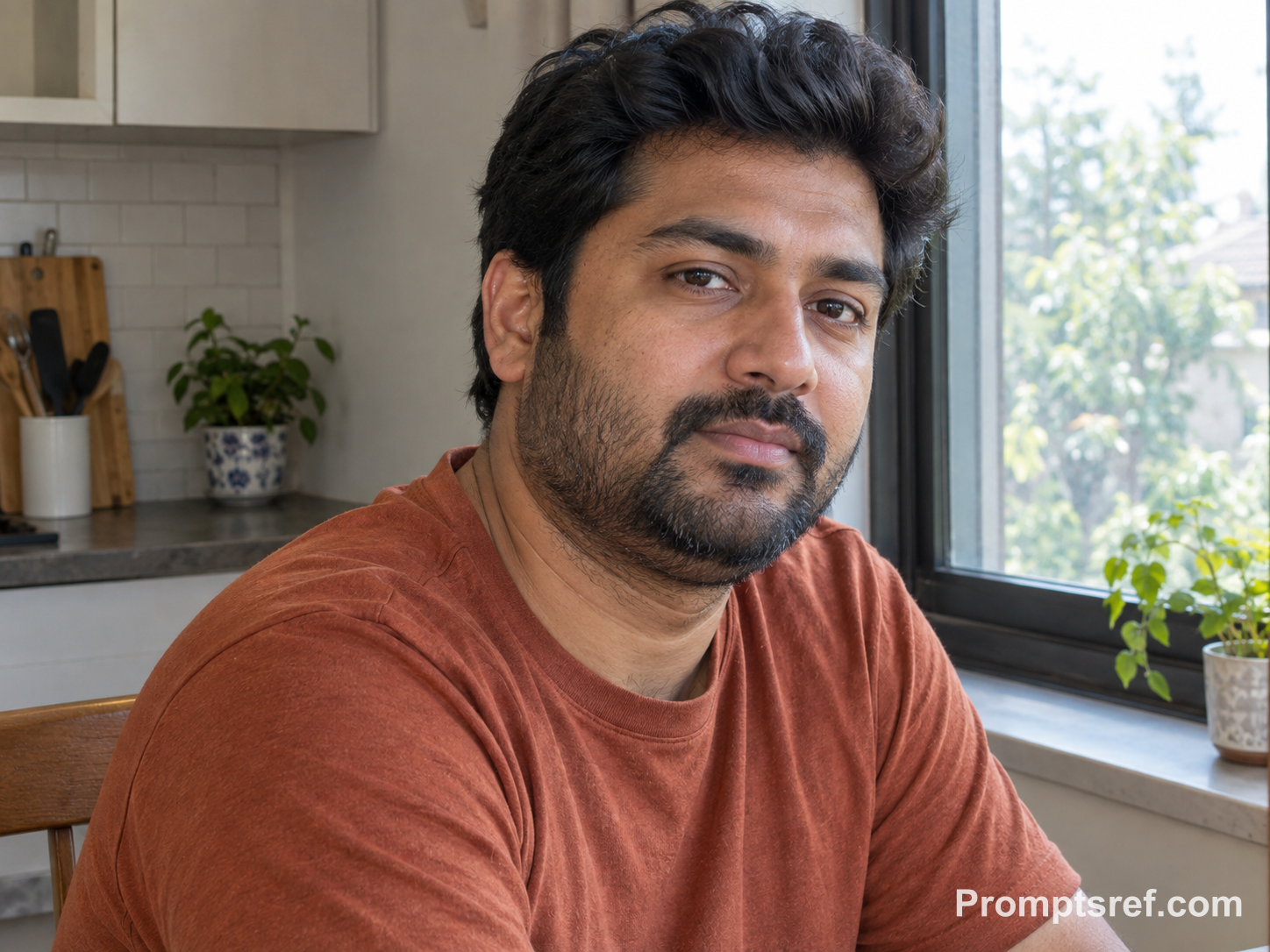
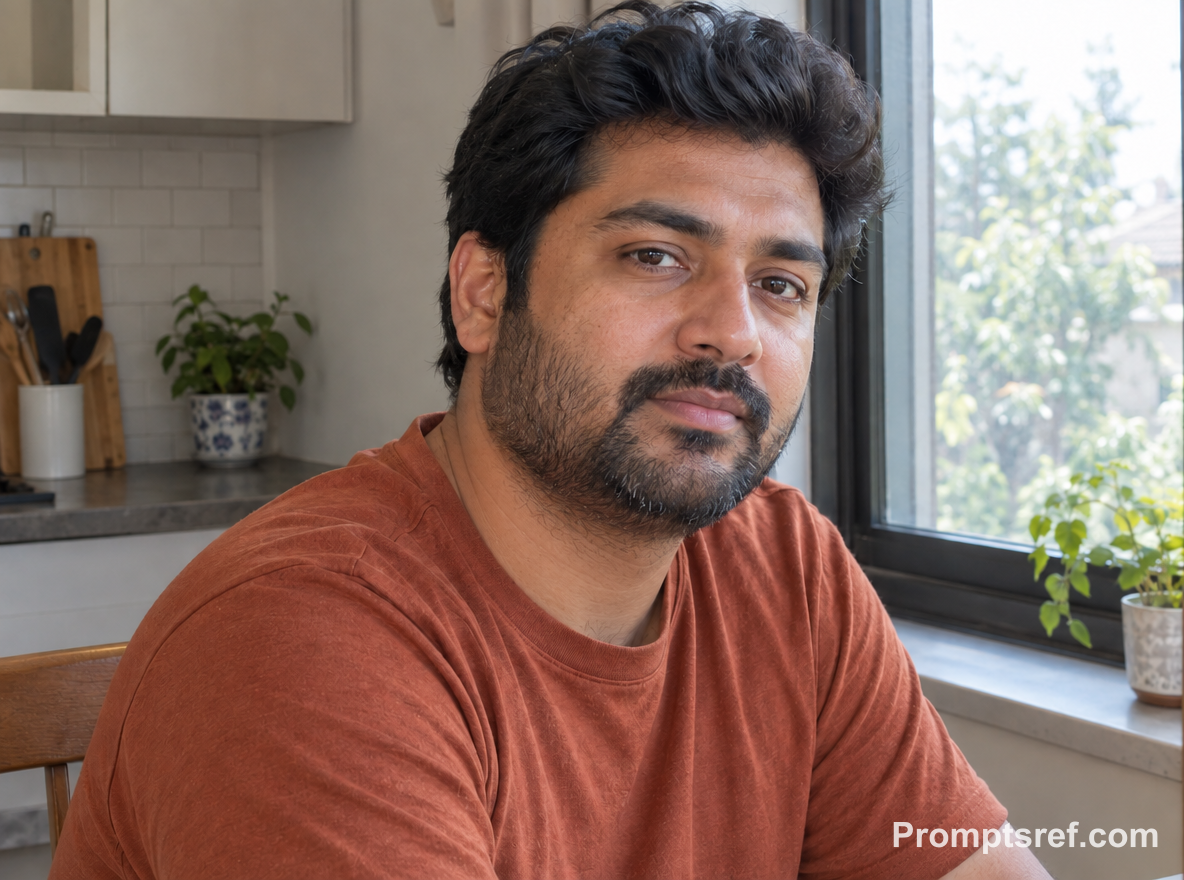
实测效果复盘: 胡须下方的挤压褶皱有所变淡,短须的毛流感与窗边自然光依然清晰。这组图整体改动力度较轻,属于非常克制的微调;在实际操作中,建议先确认胡须下缘没有发虚,再决定是否需要加大收敛幅度。
可直接复制的编辑提示词(实测英文原文):
Using this exact before image, remove only the secondary under-chin fold beneath the bearded man’s chin. Preserve his identity, beard shape and individual hairs, facial features, face width, chin projection, neck length, age, body size, hairstyle, T-shirt, posture, expression, window light, and kitchen background. Keep realistic pores, beard texture, and an anatomically plausible soft shadow under the chin. Do not erase the beard, reshape the jaw broadly, or alter the face.
展开查看虚构原图的生成提示词
Create a realistic fictional adult South Asian man in his mid-thirties with a short, neatly uneven beard and thick dark hair. He wears a plain rust-colored T-shirt and sits near a kitchen window, turned slightly toward the camera with a thoughtful neutral expression. Make the ordinary secondary double-chin fold clearly visible beneath the beard line, while preserving individual hairs, natural skin texture, realistic daylight, and a lived-in but uncluttered background. Horizontal 4:3 composition.
7. 长辈人像:区分目标双下巴与正常岁月颈纹
修长辈的照片时,必须写清楚你要淡化的只是“下巴正下方的那一道局部褶皱”,并明确要求保留其他岁月纹路。如果只想微调下颌轮廓、保留真实年龄感,千万不要下达“抚平整个颈部”这类宽泛指令,否则会给模型过大的磨皮权限。
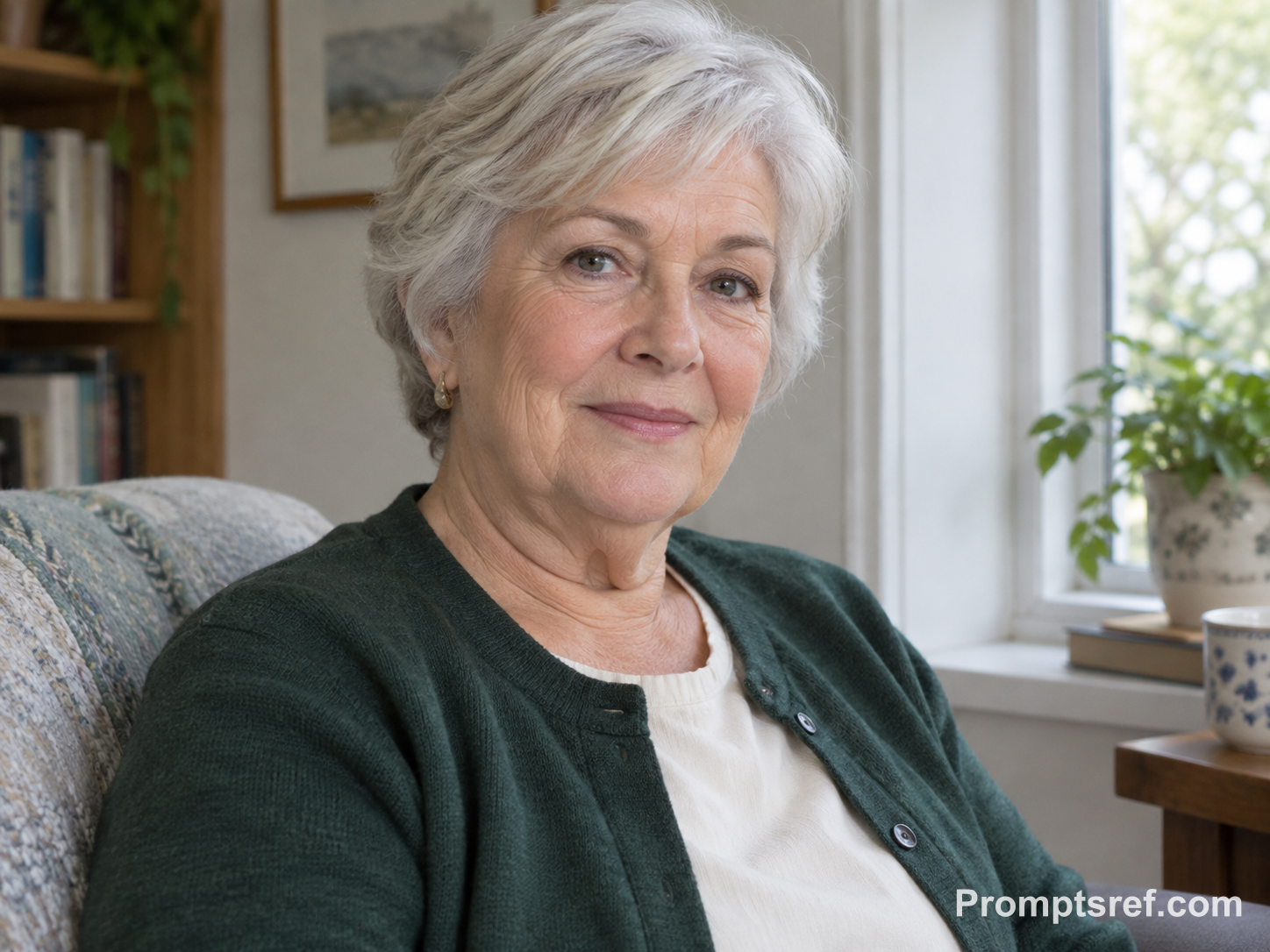
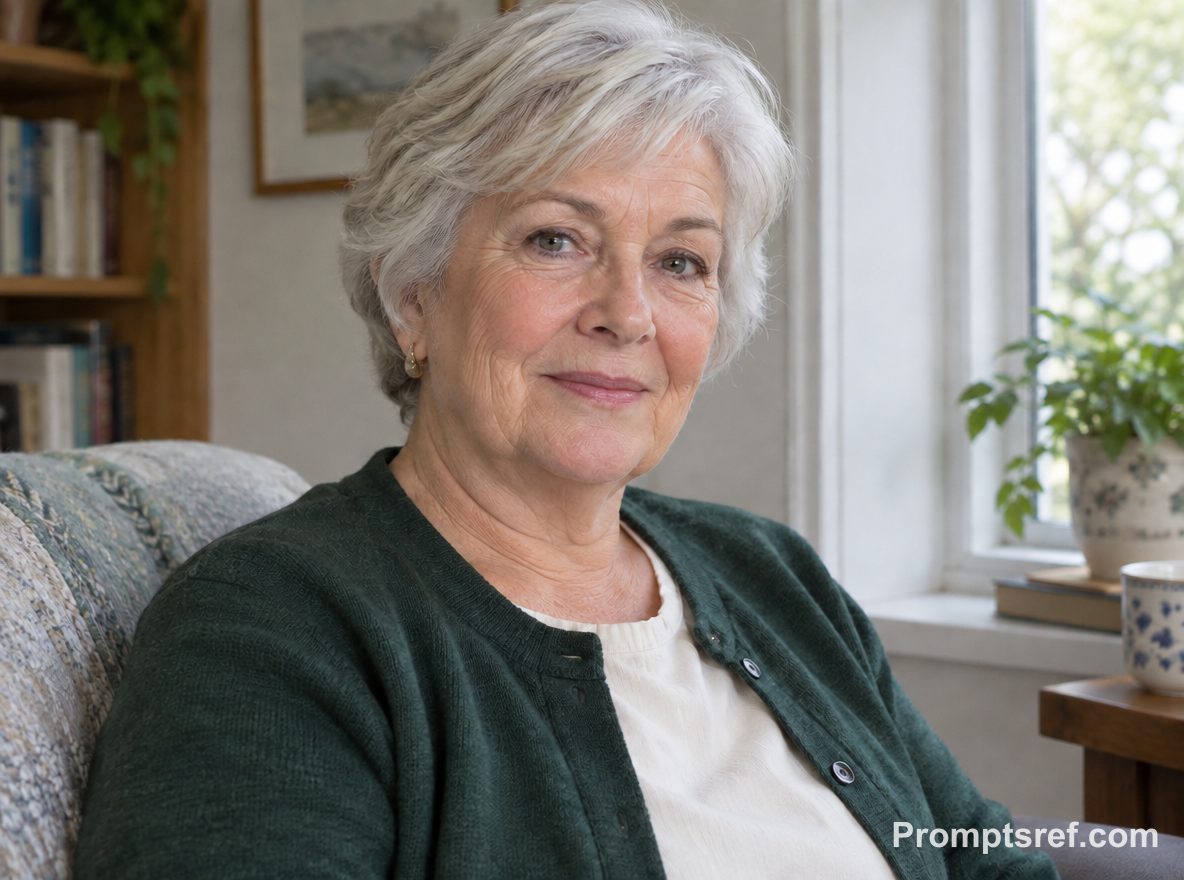
实测效果复盘: 下巴正中央的垂坠褶皱明显收敛,眼角鱼尾纹和大部分自然颈纹依然得以保留。不过邻近区域的颈部肌理仍有轻微重绘,可见在纯文本指令下,模型很难将目标褶皱与周围的老年皮肤纹理完全物理隔离。
可直接复制的编辑提示词(实测英文原文):
Using this exact before image, remove only the secondary under-chin fold beneath the older woman’s chin. Preserve her identity, age, silver hair, crow’s-feet, natural neck wrinkles, facial features, face width, chin projection, neck length, body size, clothing, posture, expression, daylight, and home background. Keep visible pores and age-related texture, leaving plausible natural shadow and folds that are not the targeted secondary fold. Do not rejuvenate, smooth, or reshape her face.
展开查看虚构原图的生成提示词
Create a realistic fictional older adult woman in her seventies with short silver hair, gentle crow’s-feet, and naturally occurring neck wrinkles. She wears a forest-green cardigan over a cream blouse and sits near a window with a calm, attentive expression. Clearly show an ordinary secondary under-chin fold alongside authentic age-related skin texture and neck lines. Use soft daylight, modest home surroundings, and a documentary portrait style. Horizontal 4:3 composition.
8. 多人合照:用“站位+衣服颜色”精准锁定目标人物
处理多人合照时,一定要用“位置+衣服特征”来锁定唯一修图对象。例如在 Reddit 这则合照求修图帖中,发帖人就精准指定了“右侧女性”并要求自然修图;套用下方提示词时,记得把“中间穿绿衬衫的成年人(center adult wearing the green shirt)”替换成你照片里同样明确的描述。
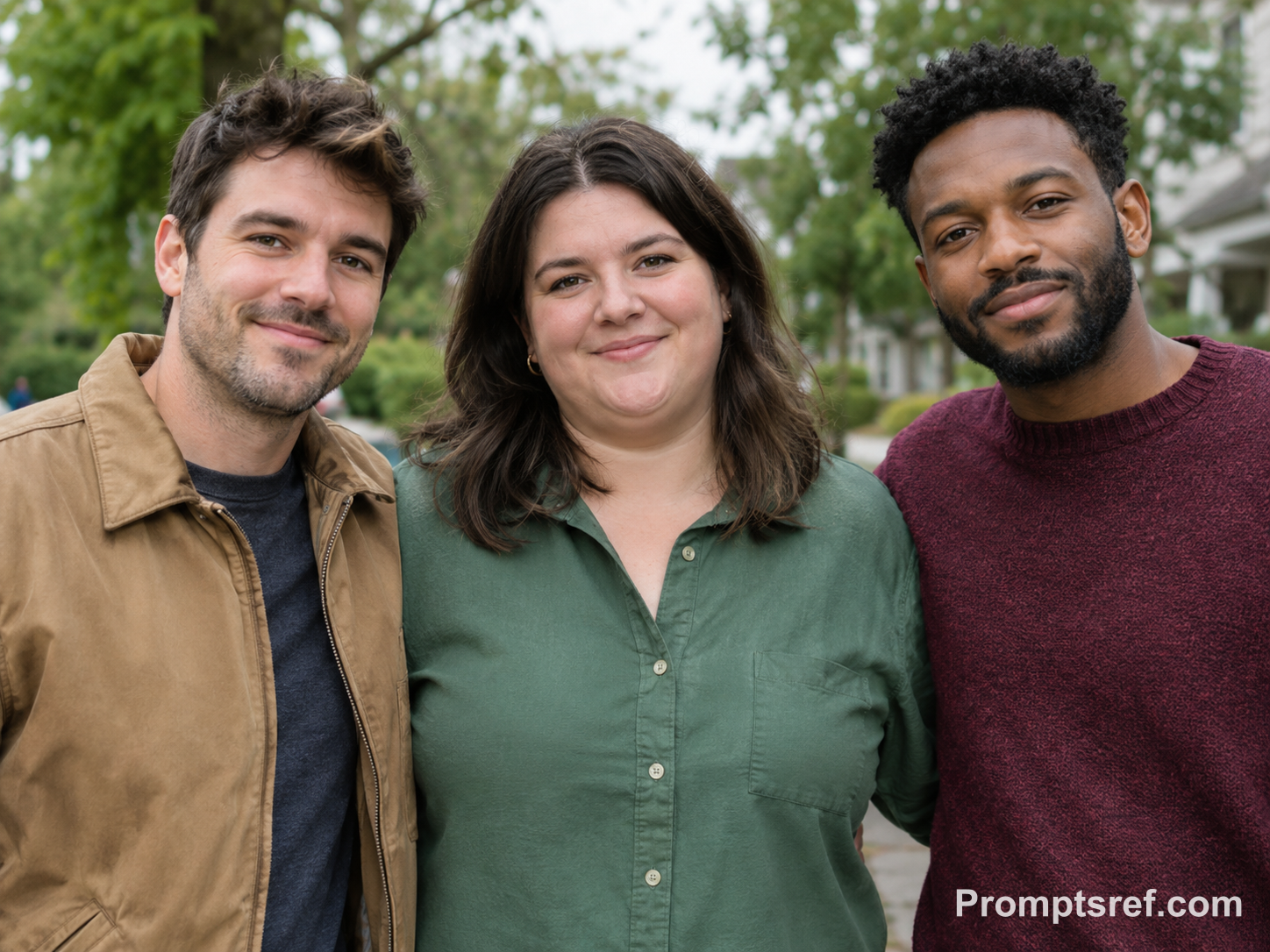
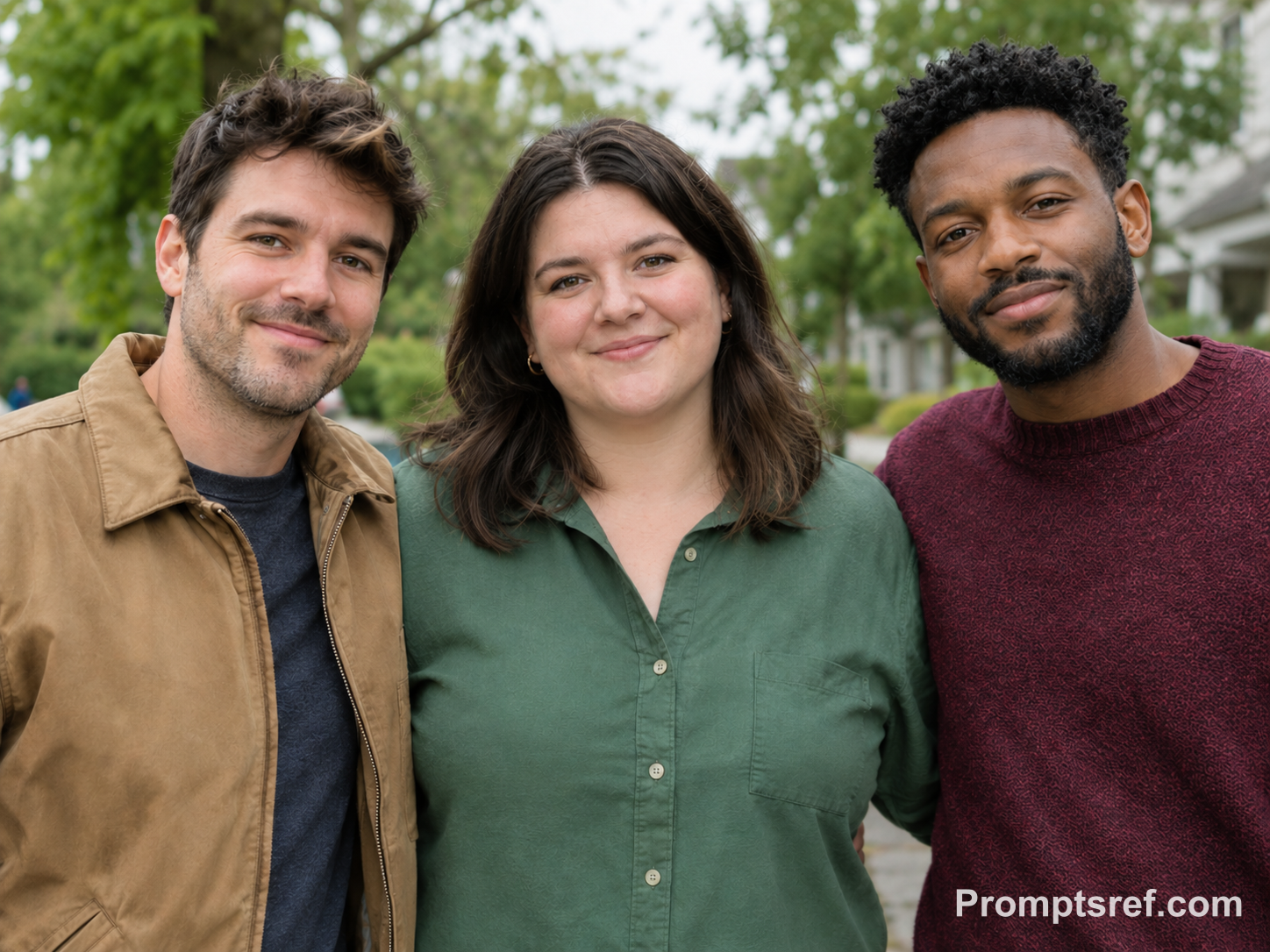
实测效果复盘: 中间绿衣人物的下巴褶皱成功淡化,两侧同伴的表情与站位也保持了可辨认的一致性。不过在修你自己的真实合照时,切记把三张脸都放大到 100% 仔细检查——仅凭小尺寸缩略图,很难发现旁人五官是否发生了细微重绘。
可直接复制的编辑提示词(实测英文原文):
Using this exact before image, remove only the secondary under-chin fold from the center adult wearing the green shirt. Edit no other person or feature. Preserve all three identities, faces, body sizes, ages, clothing, hairstyles, expressions, poses, spacing, lighting, shadows, camera perspective, and leafy background. Keep the center person’s natural skin texture and a plausible modest shadow beneath the chin. Do not slim the center face globally or alter either neighboring adult.
展开查看虚构原图的生成提示词
Create a realistic fictional group photograph of three unrelated adult friends standing shoulder to shoulder outdoors in soft overcast light. The left person wears a tan jacket, the center person wears a green shirt, and the right person wears a burgundy sweater. All three have distinct identities and relaxed expressions. Make only the center adult’s ordinary secondary double-chin fold clearly visible, with natural skin texture, balanced spacing, and a leafy neighborhood background. Horizontal 4:3 composition.
9. 餐厅暗光照片:去褶皱,但别把光影暗部全擦掉
动笔前先分清你想改的究竟是肉褶、阴影,还是两者兼有。下面这条提示词专门针对结构褶皱做收敛,同时完整保留餐厅的暖色顶光;如果强行擦掉下巴底下的所有暗部,整张脸和脖子就会失去立体感,显得像贴上去的一样。
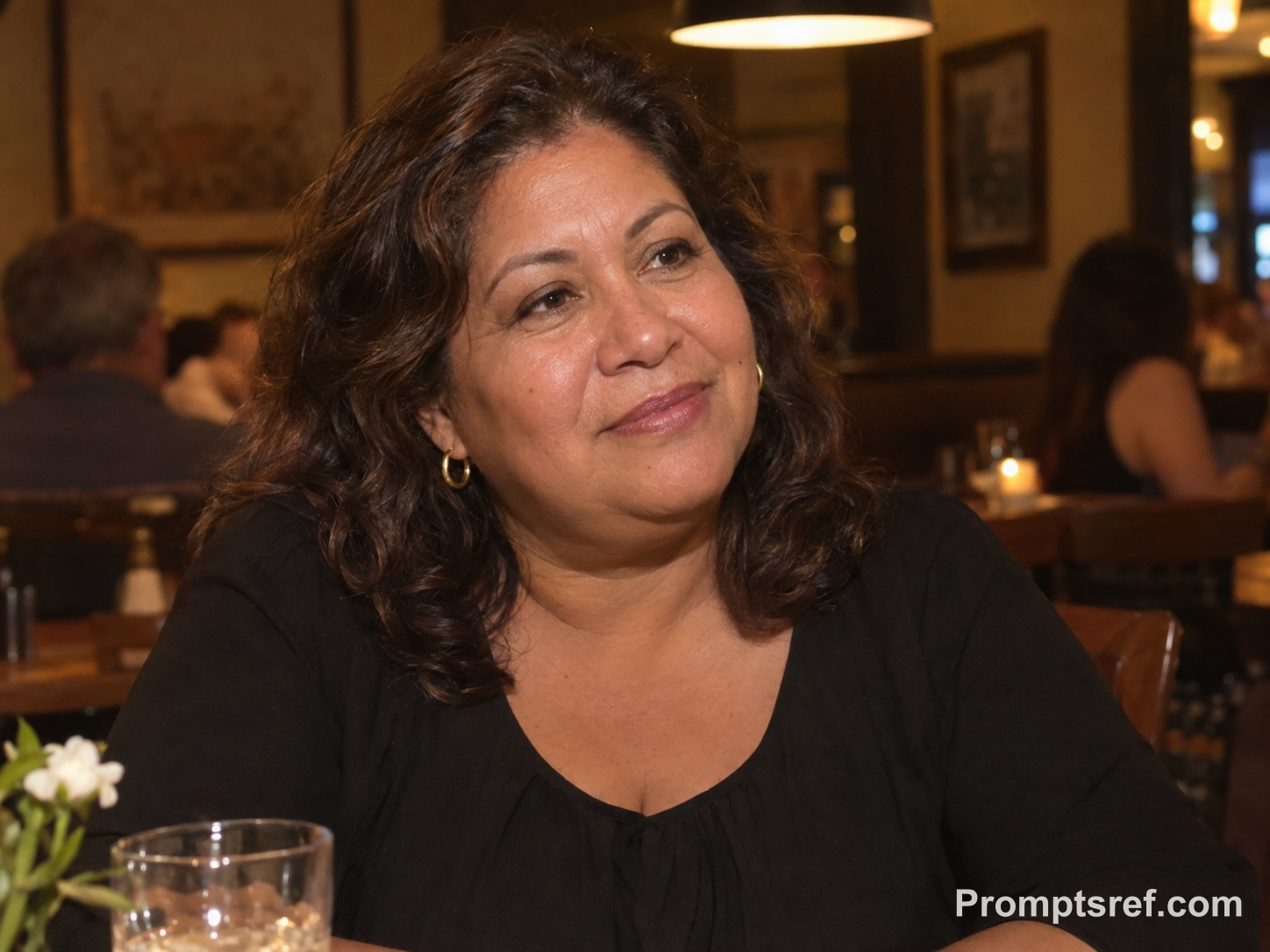
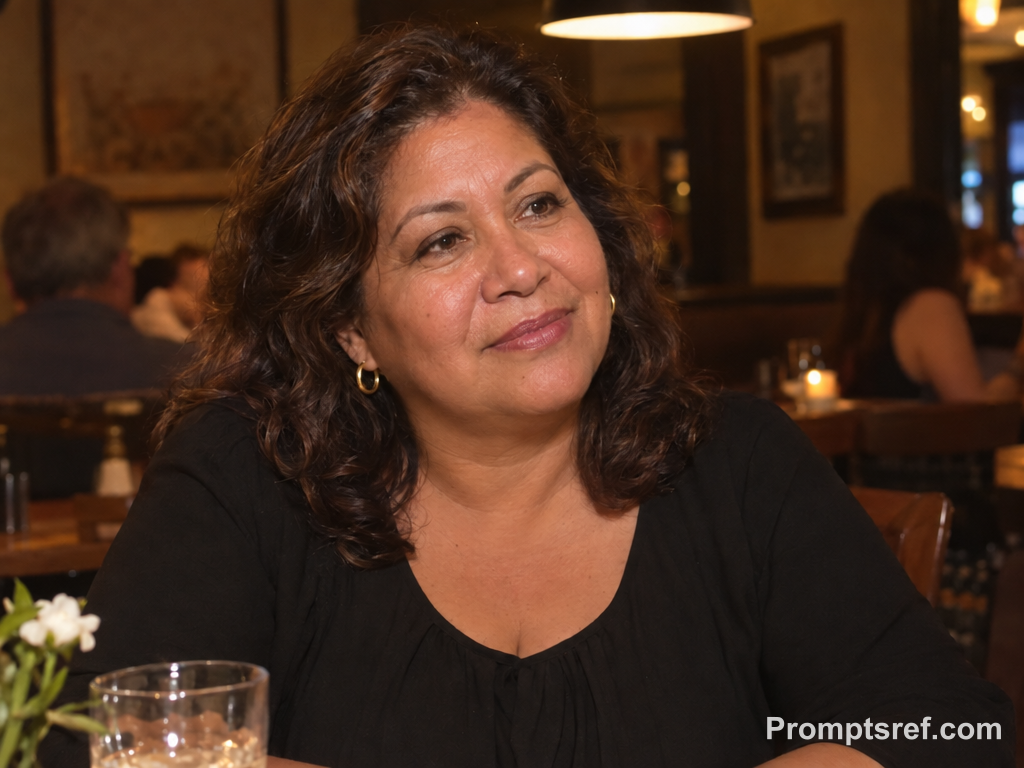
实测效果复盘: 下巴底部的双层轮廓得到了适度收敛,同时环境暖光与下颌暗部阴影依然自然在线。这种克制非常关键:把多余的挤压褶皱收干净即可,完全不需要把整个脖子修得像打了正面强光一样亮。
可直接复制的编辑提示词(实测英文原文):
Using this exact before image, remove only the secondary under-chin fold beneath the woman’s chin. Preserve her identity, facial features, face width, chin projection, neck length, age, body size, earrings, hairstyle, black blouse, listening pose, expression, warm restaurant lighting, strong overhead shadow, table setting, and background. Keep ordinary skin texture and some believable under-chin shadow. Do not brighten the image, smooth wrinkles, change makeup, or slim the face globally.
展开查看虚构原图的生成提示词
Create a realistic fictional adult Latina woman in her late fifties seated at a warmly lit restaurant table during dinner. She wears a simple black blouse and small gold hoop earrings, with shoulder-length wavy hair and a relaxed expression while listening to someone off-camera. A strong but realistic overhead pendant creates a visible under-chin shadow and clearly reveals an ordinary secondary double-chin fold. Include natural skin texture and a softly blurred restaurant interior. Horizontal 4:3 composition.
10. 低头大笑的抓拍:留住那一刻的鲜活表情
如果你爱不释手的那张照片恰好是在低头大笑时抓拍的,可以直接套用这一条。它的核心是锁死低头与大笑的动态;由于低头姿势在生理结构上必然会产生一定挤压,如果完全抹平(remove)后显得僵硬失真,不妨把指令改成 gently reduce(轻微淡化),退一步换取更真实的效果。
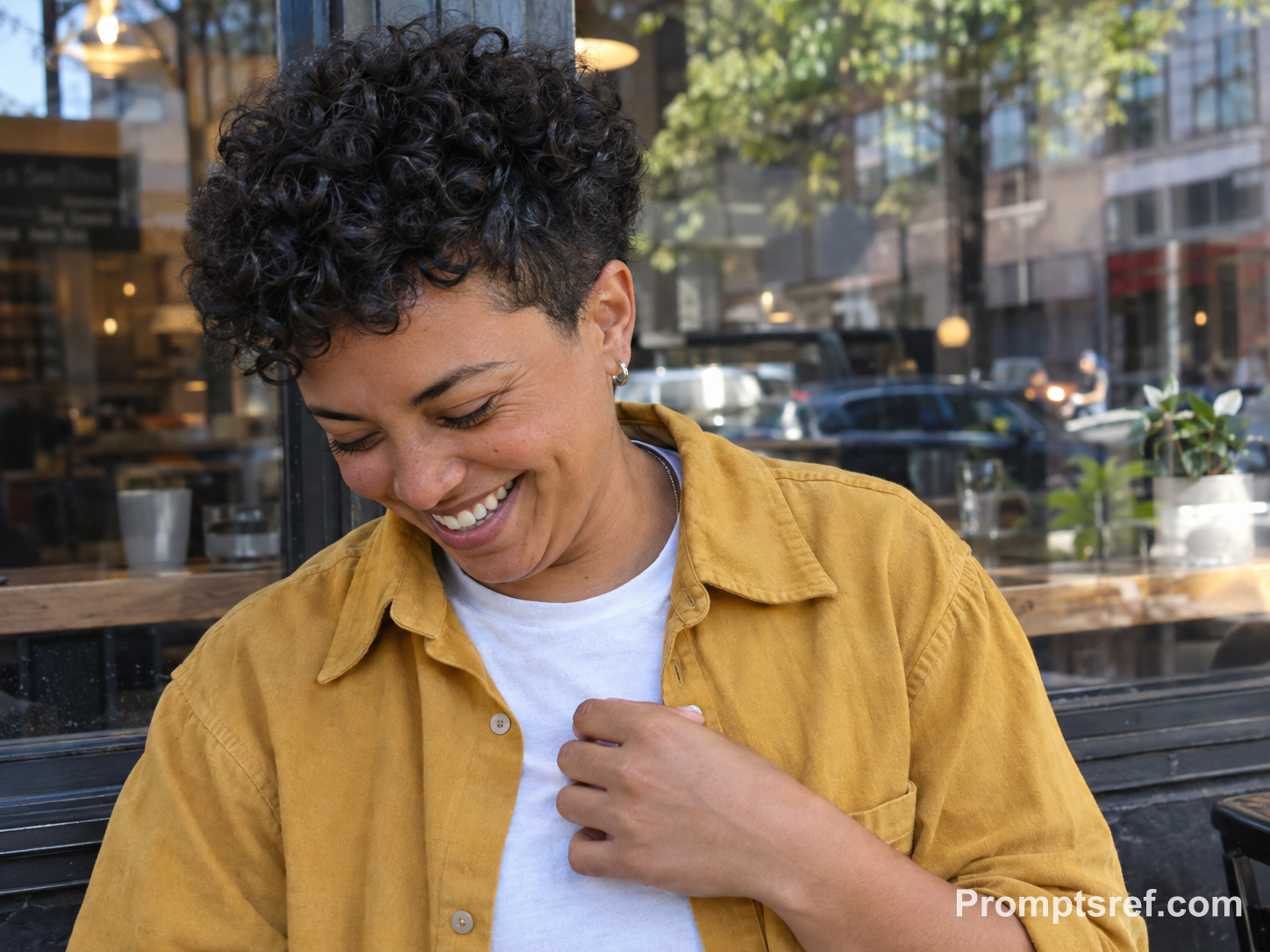
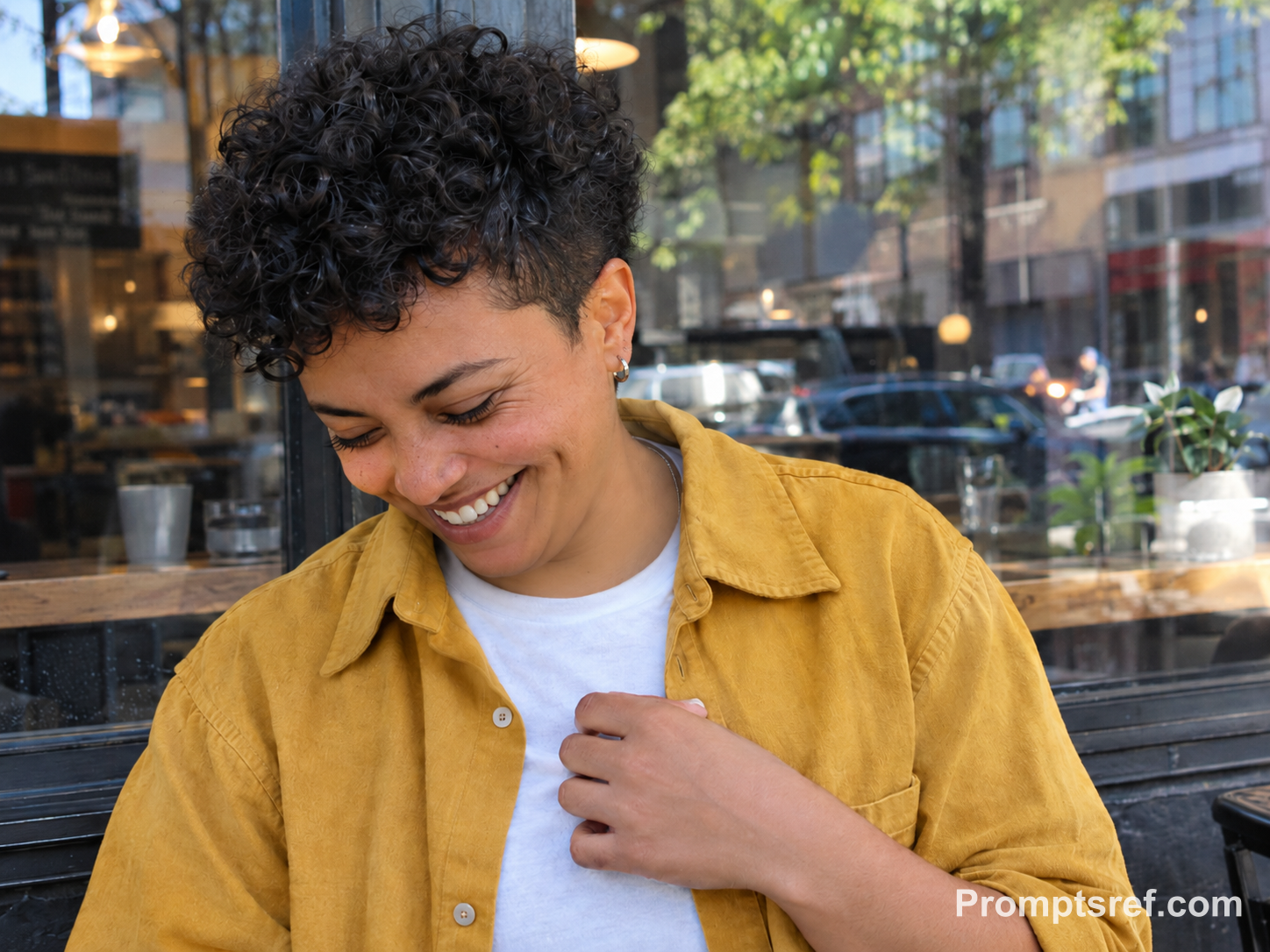
实测效果复盘: 低头、开怀大笑以及手放胸前的自然动态都得到了完整保留,下巴下方仅做了温和的收敛。不过皮肤肌理和衣物褶皱仍有细微变化,这也提醒我们:即便在提示词里写满了“保留”,最后一步依然少不了肉眼复核。
可直接复制的编辑提示词(实测英文原文):
Using this exact before image, remove only the secondary under-chin fold visible while the person looks down and laughs. Preserve their identity, facial features, laugh expression, face width, chin projection, neck length, age, body size, hairstyle, clothing, hand position, pose, natural motion, window reflections, daylight, and café background. Keep laugh lines, pores, and a plausible shadow under the chin. Do not change the expression, smooth the skin, or slim the face globally.
展开查看虚构原图的生成提示词
Create a realistic fictional adult nonbinary person in their early thirties, caught candidly looking down and laughing beside a city café window. They have short curly hair, medium-brown skin, a mustard overshirt over a white T-shirt, and one hand near the chest. Their lowered head and genuine laughter make an ordinary secondary double-chin fold clearly visible. Preserve natural laugh lines, skin texture, slight motion energy, daylight reflections, and an authentic casual background. Horizontal 4:3 composition.
修过头了?每次只针对问题改一条指令
| 出现的问题 | 下一步怎么改 |
|---|---|
| 整张脸被削窄了 | 退回原图,补充限制:“保留面颊宽度和两侧下颌角位置,仅修改下巴正下方的小范围褶皱。” |
| 脖子被强行拉长 | 补充限制:“严格保持下巴尖、衣领、肩膀和头部原有的空间位置不变。” |
| 皮肤像开了重度磨皮 | 明确要求保留毛孔、细纹以及目标褶皱以外的自然颈纹;删掉 flawless skin、beauty retouch 等宽泛美颜词。 |
| 下巴像硬贴上去的 | 要求下巴到颈部保持柔和过渡,并保留符合原图光源方向的自然阴影;切勿要求擦除全部阴影。 |
| 衣领、耳饰或胡须变形 | 在提示词中点名保护该配饰或特征;若反复被误改,建议换用支持局部涂抹选区(Inpainting)的编辑器。 |
| 变化太小、几乎没动 | 继续基于原图,将指令改为“更明显地淡化第二道褶皱”;但不要加入 slim face(瘦脸),以免扩大重绘范围。 |
| 合照里的同伴变脸了 | 用“方位+服装颜色”精准锁定目标人物,并写明其余人物完全不动;若仍被波及,直接弃用该张结果。 |
如果纯文本生成式编辑反复改动下巴周围的衣领或配饰,不妨切换到更精准的局部手动流程。例如 Photoshop 液化(Liquify)滤镜中的 冻结蒙版(Freeze Mask) 工具,可以提前涂抹锁死不想变形的区域——当衣领紧贴下巴时,先冻结衣料再微调下颌线会稳妥得多,具体用法可参考 Adobe 官方冻结蒙版操作指南。
关于照片去双下巴的常见问题 (FAQ)
AI 能只去掉双下巴、完全不改变我的五官吗?
它可以有效淡化下巴下方的可见褶皱,但文字提示词里的“保留其他部分”本质上是给模型的生成约束,并不等于像传统图层蒙版那样把周围像素绝对锁死。操作时务必上传高清原图、收窄修改描述,并在出图后重点核对五官位置;只要眼睛、嘴型或脸型变了味,就直接舍弃重来。
应该选择什么 App 或工具来操作?
要套用本文的提示词,你需要一个能同时接收“参考原图”和“文字编辑指令”的工具。图生图生成器原生支持这一工作流;如果你需要对紧贴下巴的衣领或合照中的邻近人物做像素级隔离,配合支持局部蒙版或手动液化的修图软件会更容易限定范围。
记住,纯文生图(Text-to-Image)只适合用来创建虚构测试样本;要修你自己的照片,必须先把原图作为参考输入喂给模型。
如何在 iPhone 上自然去除照片里的双下巴?
直接在手机浏览器中打开支持参考图输入的 AI 编辑工具,从相册选中原图并粘贴对应的编辑提示词即可。生成后建议“另存为新照片”,方便随时与原图左右滑动对比。
不建议直接拿 iPhone 相册自带的“清理(Clean Up)”功能涂抹下巴——Apple 官方照片编辑说明中明确提到,“清理”是专为移除背景杂物设计的,直接在人脸上涂抹有可能会触发面部打码(像素化模糊)或造成五官失真。
使用这些工具去双下巴是免费的吗?
本文整理的所有提示词模板均可免费复制使用,但调用云端大模型生成图片通常会消耗积分。在撰写本文实测时,Promptsref 提示词生成器每次对话消耗 2 积分,使用 GPT Image 2.5 Sunburst 模型生成单张 1K 图片消耗 9 积分;具体消耗请以你提交生成前界面显示的实时模型计费为准。
修双下巴时,能同时保留原本的颈纹、胡须和笑容吗?
完全可以,关键是在提示词中把它们逐一点名保护,并在出图后肉眼验货。普通横向颈纹往往并不等于你想修掉的那团下巴赘肉,下指令时写“淡化下巴正下方的第二道挤压褶皱”远比写“把脖子修平整”安全得多。
同理,修胡须人像要放大检查毛发边缘有没有糊成色块;修笑脸则要先比对嘴角弧度与苹果肌笑纹。千万别因为下巴变紧致了,就忽略了人物神态的流失。
为什么有些照片里的双下巴看起来格外明显?
头部倾角、机位高低以及顶光角度,都会显著放大下巴下方的折叠阴影。哪怕是同一个人,低头看手机抓拍和平视镜头拍摄的下颌线也会判若两人——很多时候下次拍照稍微调一下机位,比事后修图更省心。
下次拍照时,不妨试着把镜头举到略高于视线的位置,双肩自然下沉放松,下巴迎着镜头方向微微前探一点点(注意是微探,不要刻意伸长脖子)。多拍两张对比一下,很快就能找到最适合你面部骨相的角度。
需要单独加负面提示词,或者直接写 no double chin 吗?
只写一句笼统的 no double chin,既没告诉模型该改画面里的哪个人,也没交代哪些五官细节需要保留,极易导致整张脸被重绘。在支持自然语言指令的编辑模型中,直接把“小范围修改动作”和“需要保留的特征”写进主提示词即可;只有当工具界面明确提供独立的负面提示词(Negative Prompt)输入框时,才需要单独填写该栏。