

Sujeto y escena
Identifica el sujeto principal, entorno, objetos, acción y relaciones visibles.
Sube una imagen de referencia y obtén un prompt que puedes editar, copiar y reutilizar
 Imagen de referencia
La herramienta no se queda en el sujeto principal: también lee estilo, luz, composición, sensación de cámara y pequeños detalles que definen la imagen.
Identifica el sujeto principal, entorno, objetos, acción y relaciones visibles.
Describe si la imagen parece fotografía, cine, ilustración, 3D, anime, producto o arte.
Captura dirección de luz, contraste, paleta, sombras y atmósfera.
Traduce encuadre, ángulo, lente, profundidad de campo, perspectiva y recorte.
Añade texturas, ropa, materiales, entorno, emoción y acabado visual.
Genera una base útil para Midjourney, GPT image, Nano Banana y otros modelos.
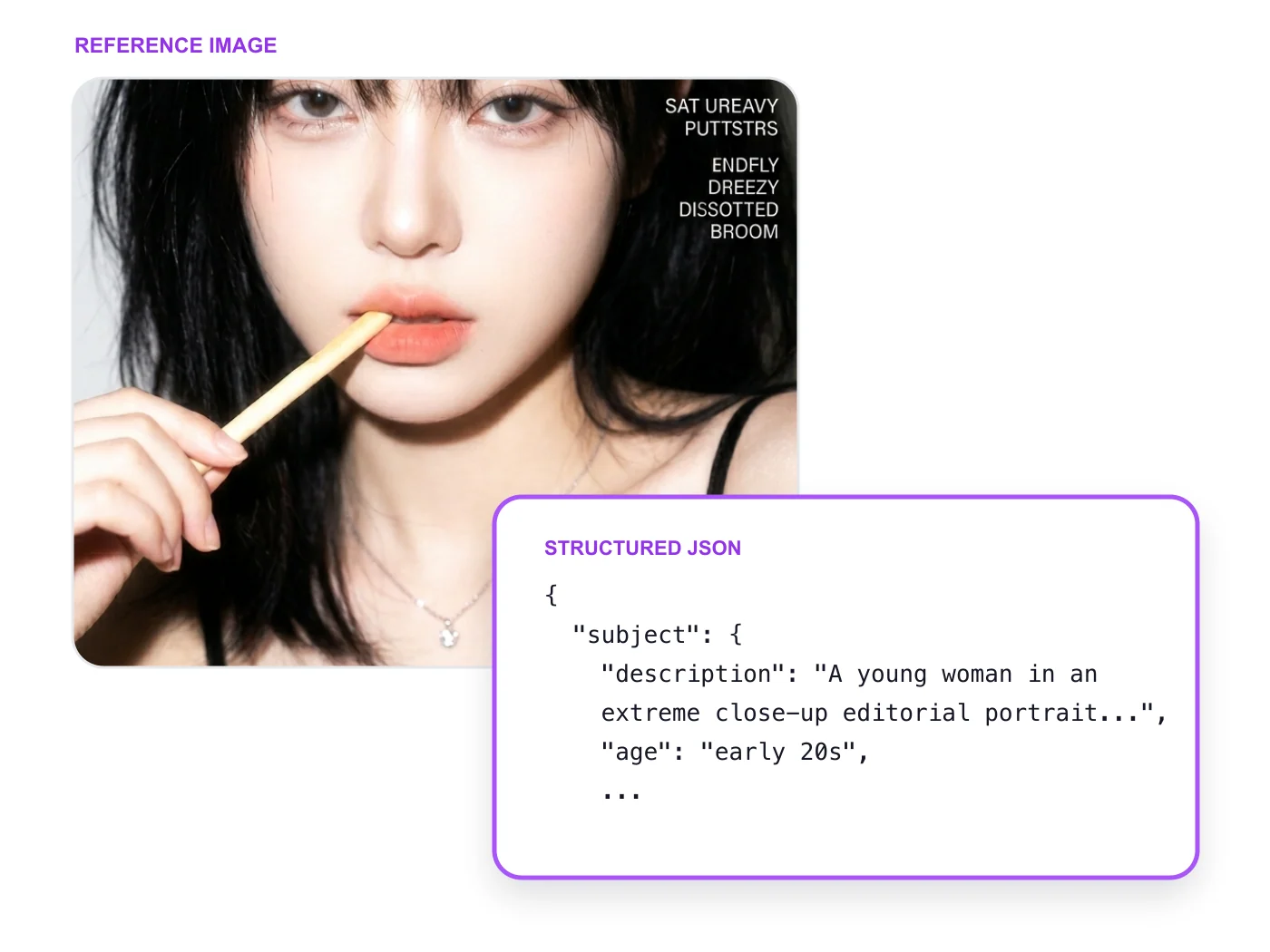
La herramienta lee la imagen como un brief creativo y entrega un prompt JSON detallado junto con una versión breve en lenguaje natural.
La versión JSON separa sujeto, pose, ropa, luz, cámara, fondo, ambiente, restricciones y elementos a evitar. Así el modelo recibe instrucciones más claras.
También recibes una versión más breve en lenguaje natural, fácil de copiar, editar y usar cuando quieres generar rápido.
Puedes elegir el idioma de salida antes del análisis y trabajar con prompts en el idioma que realmente usas.
01 · Reference image

02 · Turn image to prompt
A vertical, documentary-style street photograph with a strong early-20th-century atmosphere: an elderly white-bearded man stands in the narrow doorway of an old dark shop or pub, accompanied by a small scruffy cream-colored terrier-like dog. The man is centered but slightly off-axis, leaning casually against the doorframe with one leg crossed over the other and his weight settled into the threshold. He wears a weathered brown tweed flat cap, a dark charcoal-gray overcoat hanging open, a textured gray herringbone waistcoat, a muted rust-brown tie, loose high-waisted gray trousers, and worn dark leather shoes. His left hand rests inside a trouser pocket while his right hand raises a short smoking pipe to his mouth. His expression is quiet, stern, and contemplative, with narrowed eyes directed toward the camera and a face marked by deep age lines, a full white mustache, and a neatly heavy white beard. Smoke curls softly from the pipe toward the shadowed doorway. The dog sits in the lower-left foreground, looking upward toward the man with an alert, affectionate expression. Its fur is shaggy, wiry, and uneven, pale ivory with slightly darker beige patches around the ears and muzzle; the fur should appear tactile, dusty, and naturally tousled rather than groomed. The man’s face and hands show dry, weathered skin with visible wrinkles, creases, and realistic texture, softly touched by warm reflected light. No other body skin is visible. Frame the scene as a close full-body portrait from a slightly low, eye-level-to-chest-height viewpoint, as if taken by a photographer standing just outside the doorway with a vintage 35mm camera and a normal-to-slightly-wide lens around 40mm. Use a vertical 4:5 composition. Keep the man dominant in the center, the dog anchoring the lower-left corner, and the doorway creating strong dark vertical framing on both sides. Allow slight asymmetry, imperfect centering, subtle lens distortion, a little foreground obstruction, and the feeling of a found archival photograph rather than a polished studio portrait. The old shopfront is cramped and heavily worn: dark brown and black wooden doorframes, chipped paint, stained surfaces, faded hand-painted signs, shelves of bottles, stacked papers, tins, and small miscellaneous goods visible along the edges. The interior behind the man is almost black, creating a deep recess that makes his face, clothing, pipe smoke, and the dog stand out. Use warm, low-contrast daylight mixed with amber reflections from aged wood and nearby shop surfaces. A soft directional light enters from the front-left, grazing the man’s beard, cap, coat shoulders, waistcoat texture, and the dog’s fur while leaving the doorway behind him in dense shadow. Add faint cool ambient fill from the street, subtle rim light on the coat edge, and naturally uneven exposure across the frame. The light should behave physically: highlights catch on worn fabric fibers, the pipe, dusty bottles, and rough wood; shadows remain brown-black and slightly lifted rather than pure digital black. Use shallow-to-moderate depth of field, keeping the man’s face, pipe, waistcoat, and dog recognizable while allowing the shop edges and background objects to soften gradually. Create a tactile analog image with muted sepia, tobacco brown, olive gray, charcoal, faded cream, and subdued rust tones. Include fine film grain, slight halation around bright edges, soft focus falloff, minor dust specks, faint scratches, gentle vignette, restrained color fading, and the imperfect tonal softness of an aged color photograph or hand-tinted archival print. Avoid a modern digital-clean appearance, fashion-editorial polish, exaggerated sharpness, glamour retouching, plastic skin, contemporary clothing, excessive smoke, dramatic cinematic lighting, or a pristine background. The image should feel like a fleeting moment that happened decades ago and was discovered later: a tired shopkeeper pausing in the doorway, his loyal dog waiting beside him, while the street continues just outside the frame. Caption energy: “He had been standing there all afternoon, pipe glowing quietly, the dog watching the world go by.”
03 · Generated image

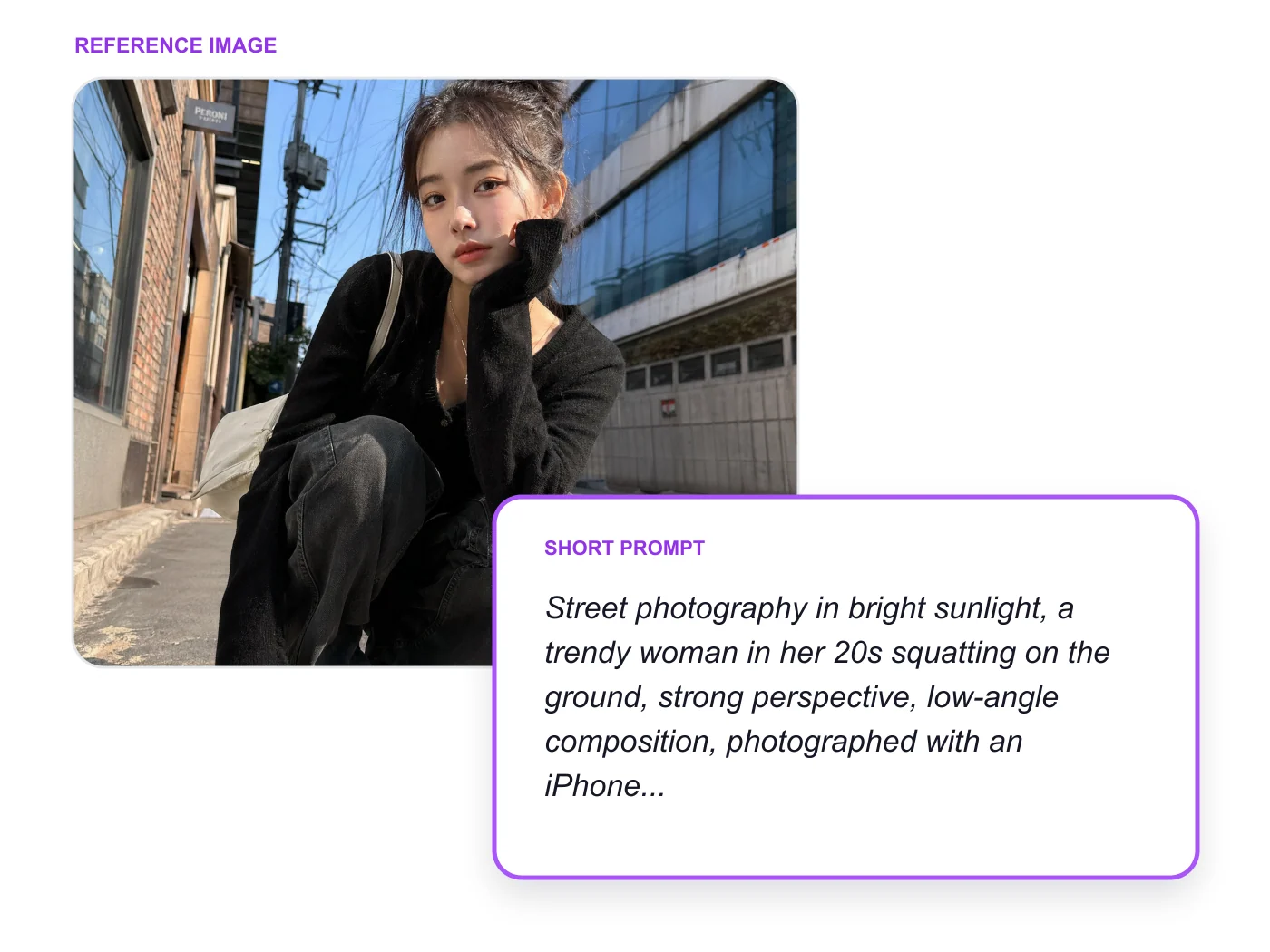
Conserva la descripción visual y añade la proporción, parámetros o sintaxis que necesite tu modelo.
Funciona bien con prompts detallados en lenguaje natural sobre sujeto, pose, cámara, luz y acabado.
Útil para recrear referencias, remezclar imágenes y trabajar con prompts que requieren comprensión visual.
Ideal para referencias de estilo, estética cinematográfica, SREF y conceptos de alto impacto.
Usa el prompt extraído como base y añade los parámetros o sintaxis de tu generador.
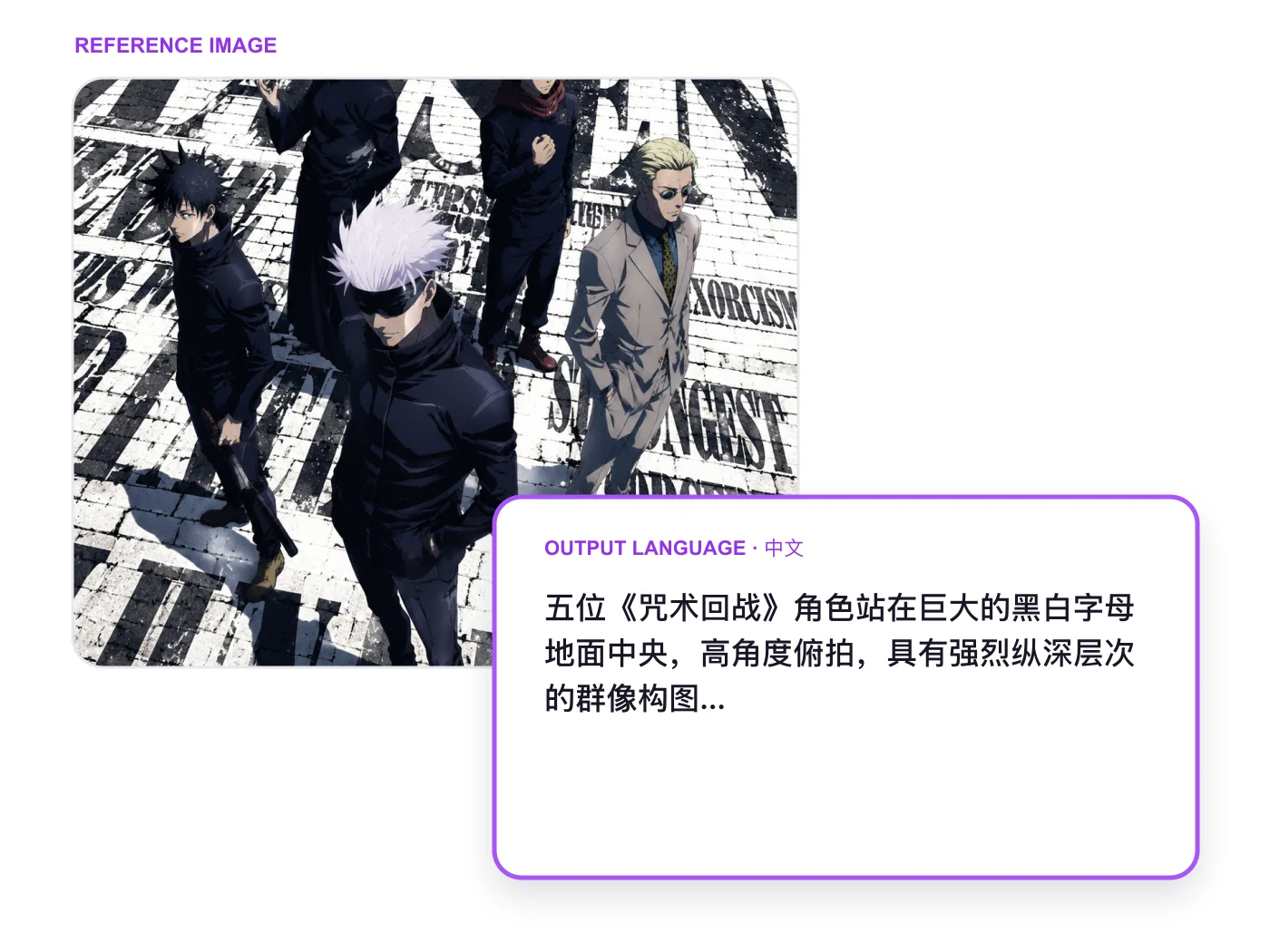
Funciona con todo tipo de escenas: retratos, productos, carteles, ilustraciones, comida, viajes y mucho más.
La herramienta Image-to-Prompt convierte imágenes en prompts descriptivos. Utiliza inteligencia artificial para analizar el contenido de la imagen y generar prompts correspondientes, que pueden ser utilizados para crear imágenes similares u otras tareas de generación de texto a imagen. Esta herramienta ayuda a los usuarios a comprender y describir mejor el contenido de las imágenes, facilitando la generación de imágenes por IA y el trabajo creativo.
La imagen que subes se almacena de forma segura para que puedas consultar el prompt generado y tu historial. Permanece privada en tu cuenta y solo tú puedes verla; no aparece en la galería pública ni se comparte con otros usuarios.
Image-to-Prompt juega un papel crucial en la generación de imágenes por IA al ayudar a los usuarios a extraer información clave de imágenes existentes y generar prompts precisos. Estos prompts pueden servir como nuevas descripciones para crear imágenes similares o mejoradas, ayudando a los usuarios a entender mejor cómo la IA "ve" las imágenes y a mejorar sus habilidades de escritura de prompts.
La salida de Image-to-Prompt típicamente incluye descripciones del tema principal, el entorno, el estilo artístico, el esquema de colores, las condiciones de iluminación y el estado de ánimo o atmósfera general. También puede describir sujetos específicos, acciones, poses, composición, perspectiva, coloración, estilo o características detalladas presentes en la imagen, con el objetivo de proporcionar una representación textual completa.
Usar Image-to-Prompt es simple: solo suba una imagen a nuestra herramienta. Nuestra IA analizará la imagen y generará prompts detallados. Luego puede usar este prompt como punto de partida para crear nuevas imágenes con generadores de imágenes de IA o refinarlo aún más según sus necesidades específicas.
Nuestro generador Image-to-Prompt utiliza modelos avanzados de IA para proporcionar descripciones de imágenes altamente precisas. Sin embargo, como todas las tecnologías de IA, ocasionalmente puede malinterpretar ciertos elementos. Trabajamos continuamente para mejorar su precisión y alentamos a los usuarios a revisar y ajustar los prompts generados según sea necesario para sus propósitos específicos.
Nuestro generador Image-to-Prompt está diseñado para manejar varios tipos de imágenes, incluyendo fotografías, arte digital e ilustraciones. Sin embargo, funciona mejor con imágenes claras y de alta resolución. Algunas imágenes altamente abstractas o complejas pueden resultar en descripciones más generalizadas.
Usar Image-to-Prompt le ayuda a obtener información sobre cómo la IA interpreta la información visual. Esto le ayuda a entender qué elementos incluir en sus propios prompts al generar imágenes y sirve como una excelente herramienta para aprender el vocabulario y la estructura de prompts de imagen efectivos.
No, el generador Image-to-Prompt no permite ningún contenido NSFW. La carga de contenido NSFW será bloqueada por nuestro sistema.


